New Berlin's Local Foundation & Basement Specialists
Basement Waterproofing in New Berlin, WI
Call 414-262-5777 — we'll diagnose it and give you a straight, written quote.
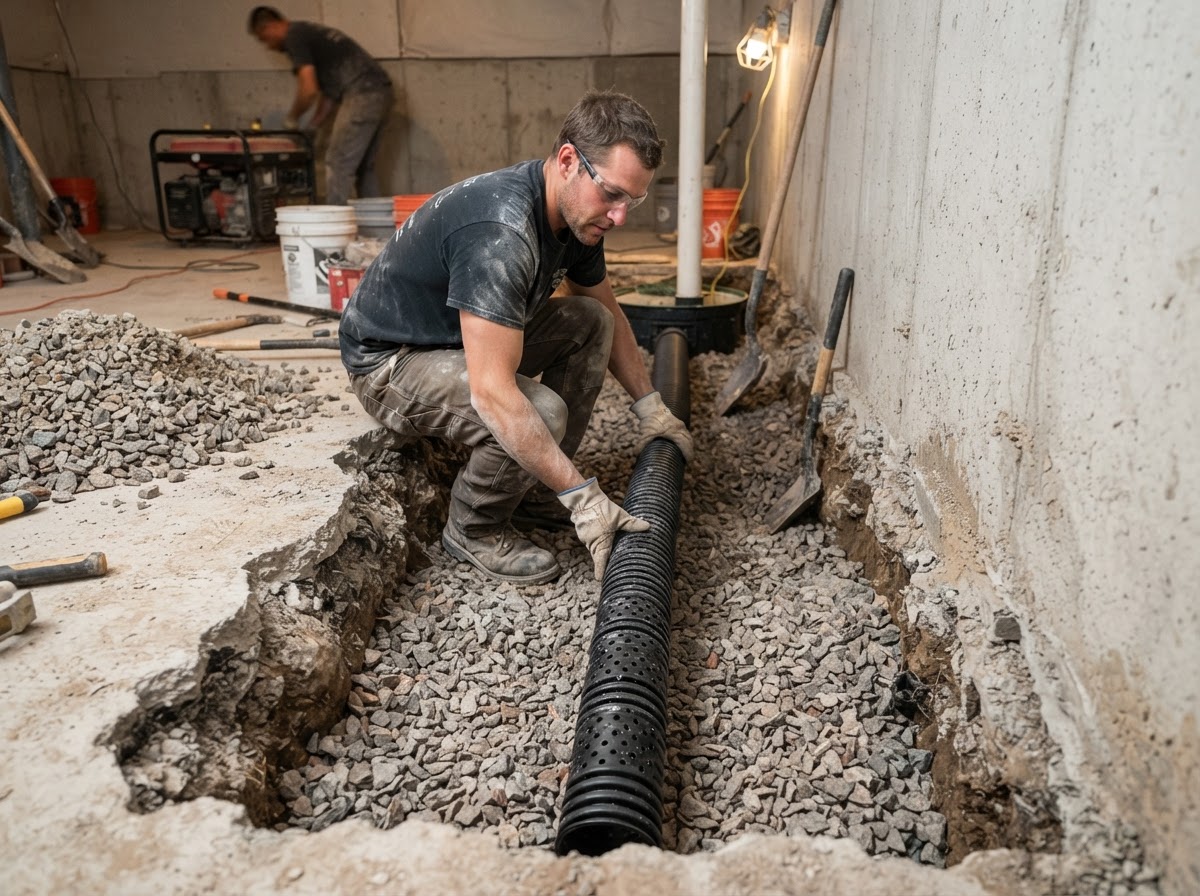
Water finds its way in through the path of least resistance — usually the cold joint where the floor meets the wall, through damp or wet walls, around leaking window wells, or up through the floor when hydrostatic pressure builds under the slab. A clogged or missing drain tile makes all of it worse.
We stop it at the source with interior drain tile systems, exterior waterproofing membranes where they make sense, and the grading and downspout fixes that keep water away from the foundation in the first place. A dry basement stays dry because the water never gets a chance to pool against the wall.
Water Always Wins the Waiting Game
The heavy clay under New Berlin holds water against your foundation long after the rain stops, so a basement that seeps once will keep finding new ways in until the drainage is fixed at the source. Sealing a crack or painting the wall only pushes the water to the next weak spot — and the next storm decides when it shows up. A proper drain tile and sump system gives that water a controlled path out, so the pressure never builds against the wall in the first place. Fixing it before the next thaw is far cheaper than drying out a finished basement.
Call 414-262-5777Request Your Free Estimate
Tell us what you're seeing. No obligation.
Proud to Serve New Berlin & Southeastern Wisconsin
We work across the whole region. Tap your town for local details.
What's Included
Interior drain tile
A perforated pipe in stone along the floor-wall joint that relieves pressure and routes water to the sump.
Exterior waterproofing membrane
A barrier applied to the outside of the wall so water never reaches it in the first place.
Window well & downspout fixes
Leaking window wells and misdirected downspouts are common, fixable water sources.
Sump pump integration
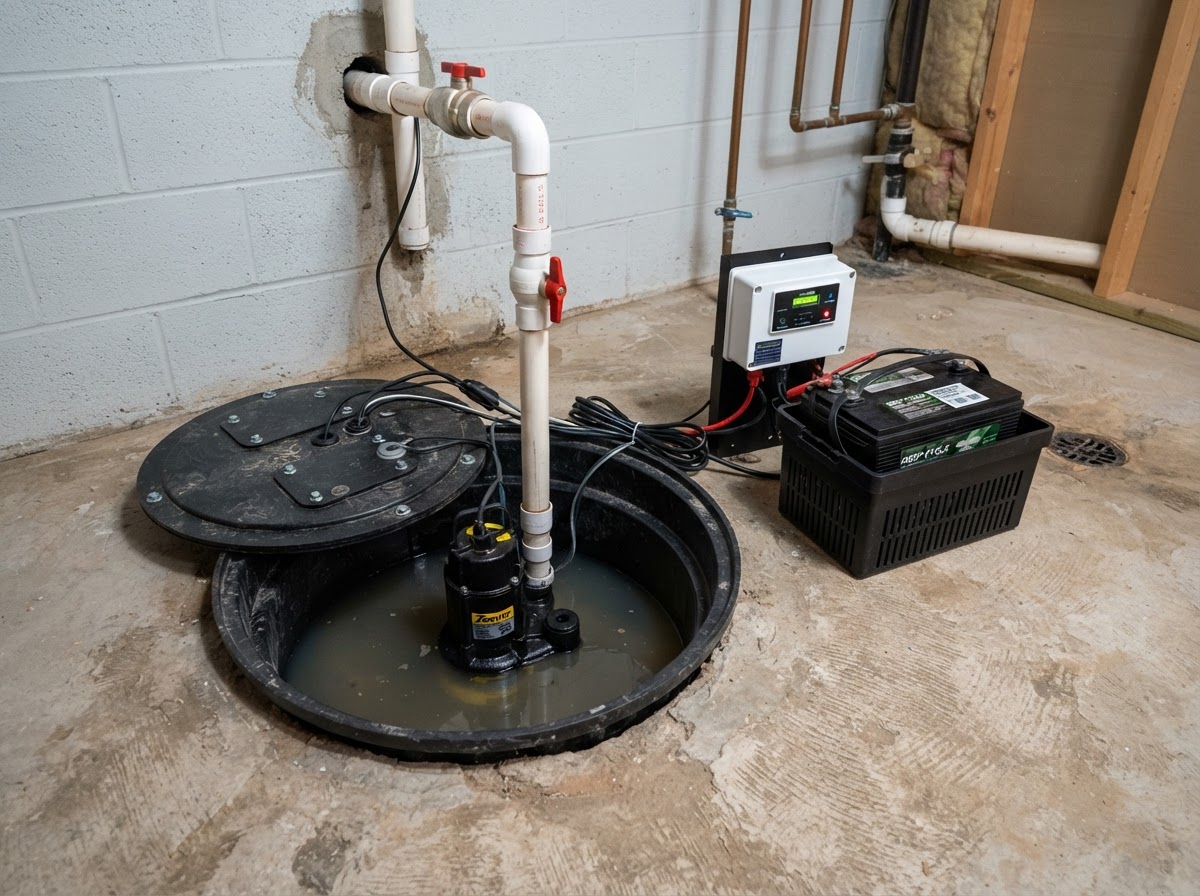
Drain tile needs a working sump pump to discharge the water it collects — we make sure both work together.
Grading & drainage
Soil sloped away from the foundation so water runs off, not in.
Why This Happens in New Berlin
Basements around here get wet for the same reasons they settle: the glacial till under southeastern Wisconsin is full of heavy clay that holds water against basement walls instead of draining it away. When that clay is saturated, hydrostatic pressure pushes water hard against the foundation and forces it through every weak point — especially the floor-wall joint. Spring snowmelt and intense summer thunderstorms, like the severe flooding the region saw in July 2010 and August 2025, can saturate that clay in hours.
Most homes in New Berlin were built from the 1950s through the 1990s, so their original drain tile — often aging clay or perforated pipe surrounded by stone that's now silted up — is decades old and frequently clogged or collapsed. The subcontinental divide runs through New Berlin and the Root River begins here, the Fox River runs through Waukesha, and Muskego surrounds Little Muskego Lake and Big Muskego Lake with high groundwater nearby, so lots of homes sit on lots where the water table is high to begin with.
Prevention Tips
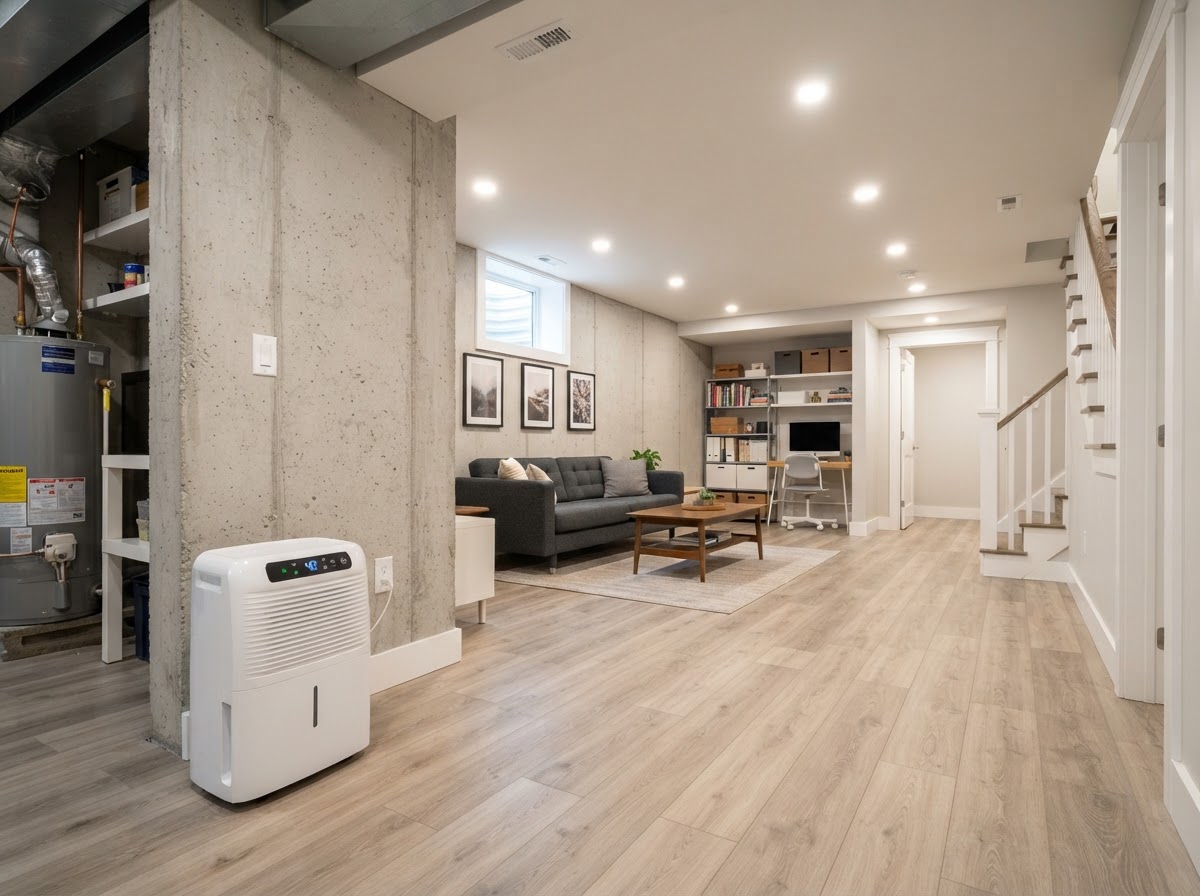
Keep water away from the foundation before it ever reaches the wall. Clean your gutters and extend downspouts well away from the house — at least several feet. Grade the soil so it slopes away from the foundation on all sides. Keep window wells clear of debris and covered so they don't collect water. Test your sump pump before spring thaw and storm season, and make sure the discharge line isn't frozen or blocked in winter. A dehumidifier helps manage the humidity a damp basement produces. Catch seepage early — a small wet spot is far cheaper to fix than a finished basement full of water.
Cost Guide
Every home is different, so we give you a free quote after inspection. Here's what shapes the price.
| Repair Type | Typical Price Range | What Affects Cost |
|---|---|---|
| Interior drain tile system | Free quote after inspection | Linear feet along the perimeter, floor breaking, and sump integration. |
| Exterior waterproofing membrane | Free quote after inspection | Excavation depth, wall length, and whether downspouts are rerouted. |
| Window well & downspout fixes | Free quote after inspection | Number of wells, downspout extensions, and grading work. |
| Full system (drain tile + sump) | Free quote after inspection | Basement size, existing tile condition, and pump/battery backup needs. |
Why Choose Us for Basement Waterproofing
Manage the water, not paint over it
We give water a controlled path out instead of sealing a wall that's still under pressure.
Fix the outside too
Grading, downspouts and window wells matter — we don't ignore them.
Drain tile + sump together
We make sure the system and the pump are sized to work as one.
Get Your Free Estimate
Tell us what you're seeing and we'll come take a look — no pressure, no obligation.
Our Process
Call or request
Tell us where and when the water shows up.
Inspect & trace
We find the entry point and check the drain tile and sump.
Written quote
You get a clear system plan and price, no obligation.
Install & test
We install the system and run water through it to confirm it works.
Basement Waterproofing FAQ
Is basement waterproofing worth it?
If your basement takes on water even occasionally, yes. Water at the floor-wall joint, damp walls and puddles after storms all point to hydrostatic pressure and a drainage system that can't keep up. Done right — with proper drain tile, a working sump pump, and grading that moves water away — waterproofing protects the finished space, your belongings, and the foundation itself from the slow damage repeated wetting and drying causes over years.
Interior or exterior waterproofing — which do I need?
It depends on where the water's coming in. Interior drain tile manages water that's already under the floor and relieves hydrostatic pressure at the floor-wall joint — the most common entry point. Exterior waterproofing membranes stop water before it reaches the wall, which matters if your walls are seeping through cracks or the block. Many homes need a combination, plus the grading and downspout fixes that keep water away in the first place.
Why does water come in at the floor-wall joint?
That seam — the cold joint where the poured floor meets the wall — is the weakest point and the path of least resistance. When the soil around the foundation is saturated, hydrostatic pressure pushes water under the floor and up through that joint. A working interior drain tile system relieves that pressure by giving the water a path to the sump before it reaches the floor.
Can I just seal the wall from the inside?
A sealer painted on a wet wall rarely holds for long because it doesn't address the water pressure behind it. Waterproofing means managing the water — giving it a controlled path out through drain tile and a sump pump — not just painting over it. Sealing has its place for specific cracks, but it's not a waterproofing system on its own.
Our Other Services
Sump Pump Repair
Fix pumps that won't start, run nonstop, cycle constantly or fail in a storm.
Learn more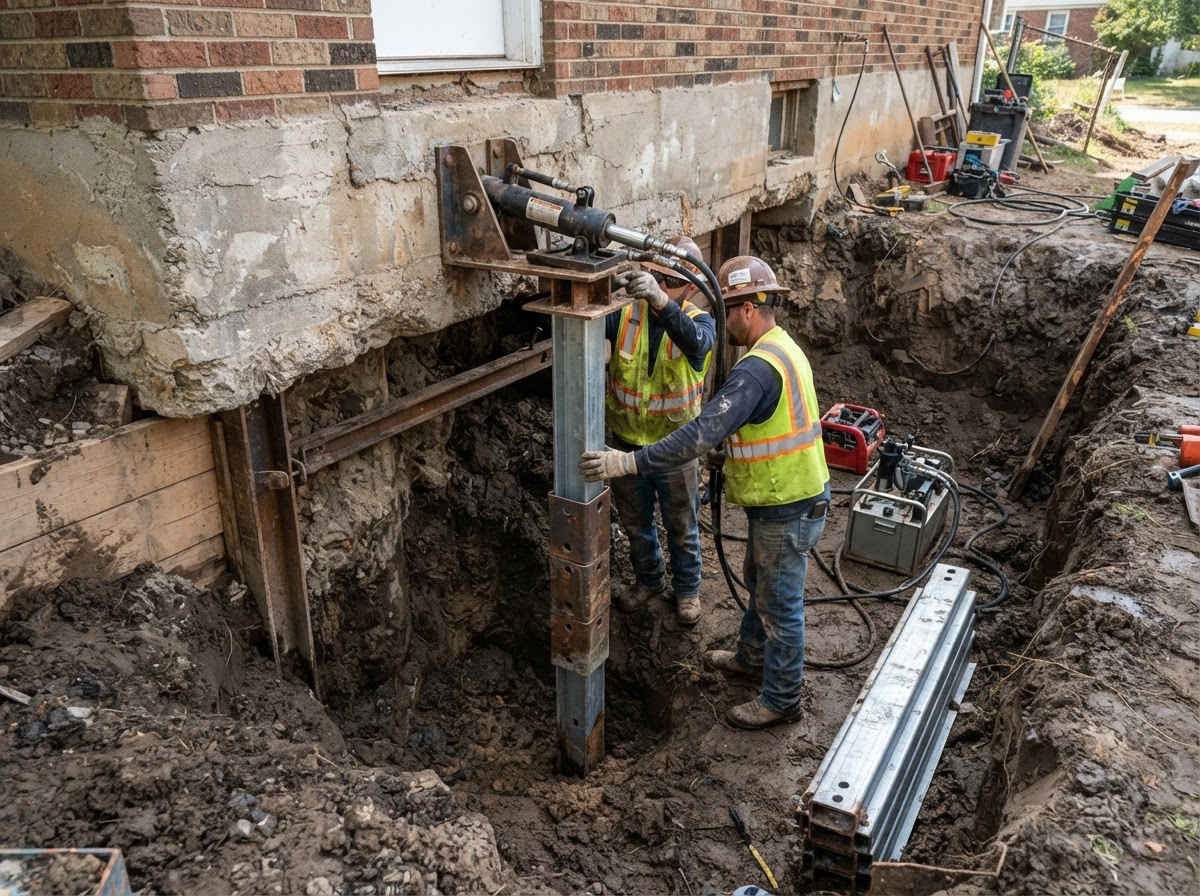
Foundation Settling Repair
Stop a sinking home — sloping floors, sticking doors and stair-step cracks.
Learn more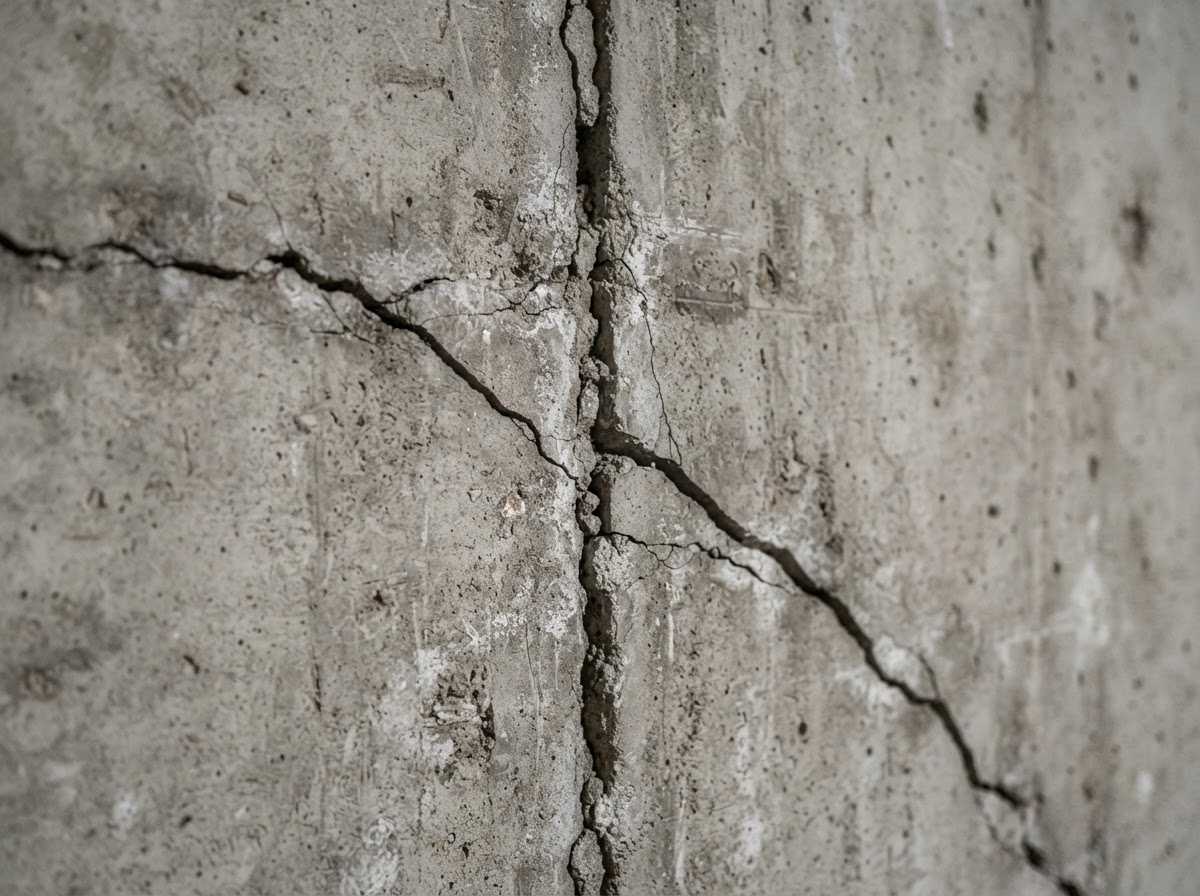
Basement Wall Crack Repair
Diagnose and seal vertical, diagonal, stair-step and horizontal cracks.
Learn more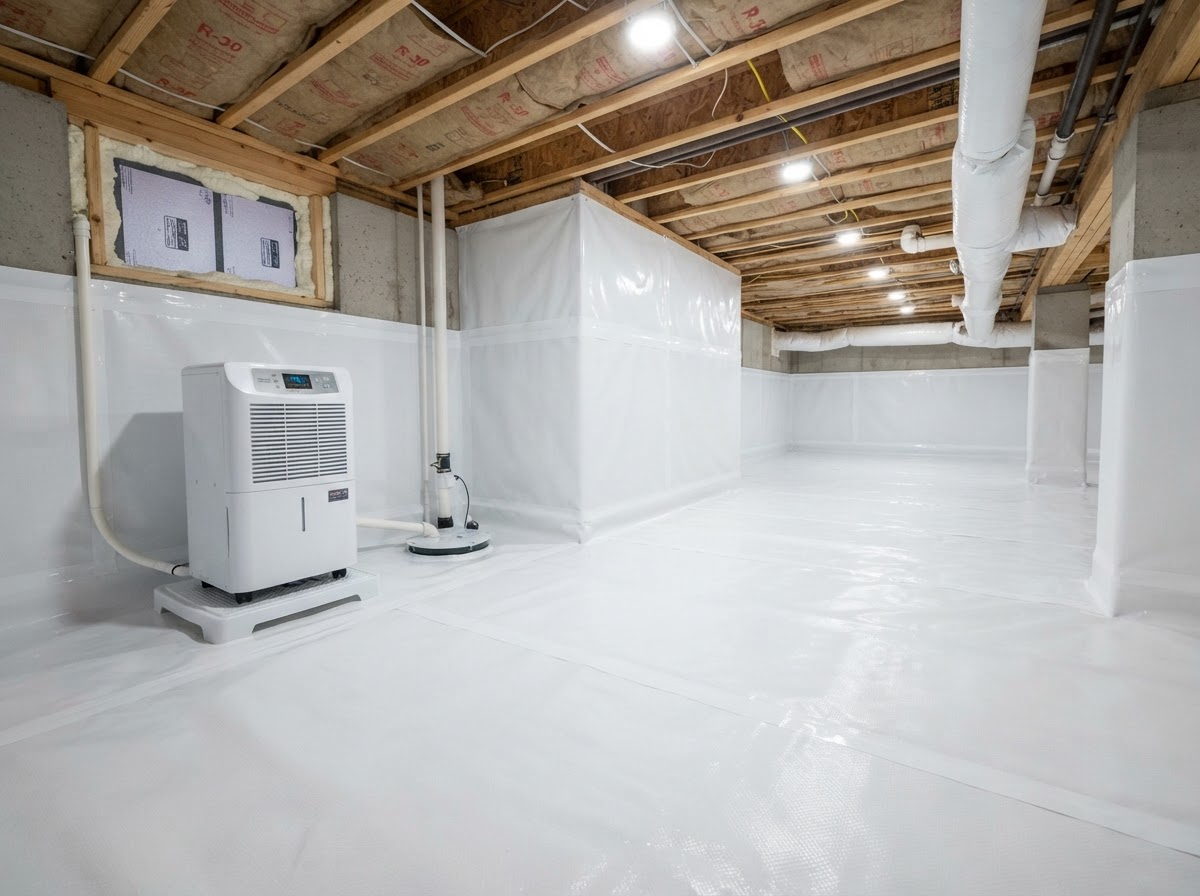
Crawl Space Encapsulation
Seal a crawl space — vapor barrier, dehumidifier, insulation, vent sealing.
Learn more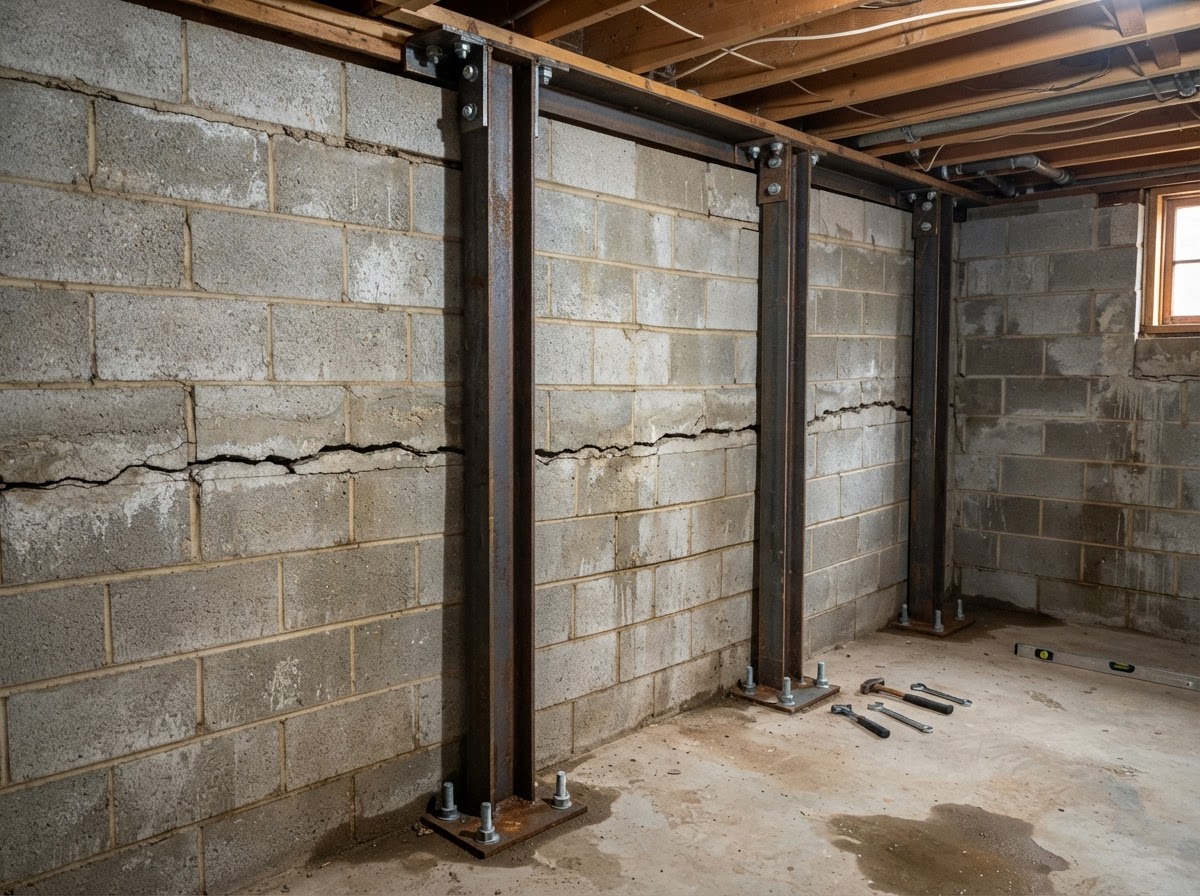
Foundation Repair
Stop walls moving inward — bowing, leaning, bulging block and horizontal cracks.
Learn more